
Read Thornton's original 1802 text with live commentary appearing exactly where you need it — anchored to the specific passage, not a separate video you have to mentally map back to the page.
"Commerce rests not merely on legal obligation but on a deeper social compact — the confidence that counterparties will honour commitments even beyond what the law strictly requires..."
Thornton establishes that without this moral foundation no system of paper credit can function — and then examines what debt actually signals: when merchants carry it, it is the engine of commerce; when consumers carry it, it merely transfers purchasing power forward, creating nothing.
Not a video course. Not a PDF you read alone. Our patented technology places live video commentary directly inside the document — anchored to the exact passage you are reading.
Think of it as a genie in a box, sitting right beside you as you read. When you reach a passage that deserves explanation, the genie appears — pointing precisely to that line, and speaking directly to what it means. You haven't moved. The text is still in front of you. The context never left your eyes.
And when you have heard enough, you simply pause the genie and continue reading alone — at your own pace, in your own silence. Then, whenever you are ready, you call the genie back.
Powered by GraphCall — a sister application to GraphFinancials, built on the same patented synchronized annotation technology. Patent US 11,327,775 B2 — granted by the United States Patent and Trademark Office.
Investors, economists, and students from around the world have discovered our Financial Archives.
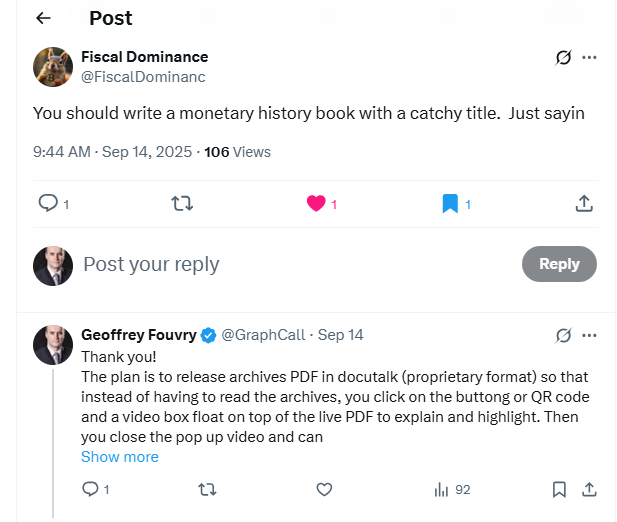
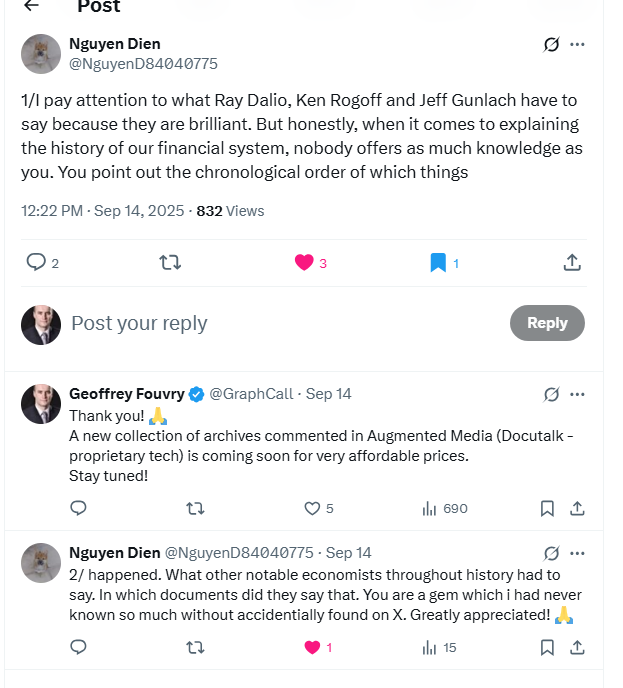
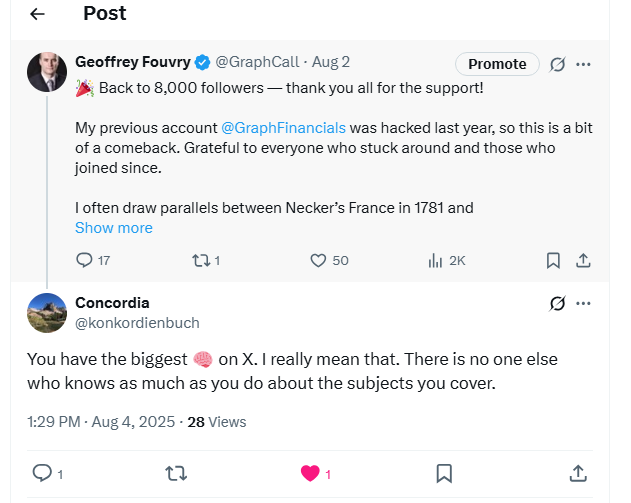
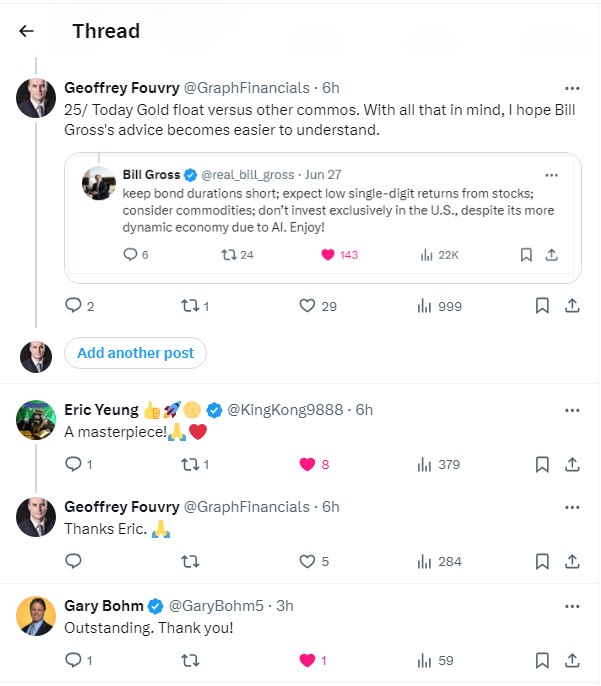
Hayek considered Thornton a forgotten pioneer. His 1802 treatise anticipated the lender-of-last-resort doctrine, monetary transmission theory, and the debate between the Currency and Banking Schools — all still contested today.
Thornton articulated why the Bank of England must expand liquidity in crises — the intellectual seed for Bagehot's doctrine and every central bank playbook since.
He mapped with precision how banknotes and credit instruments extend beyond specie — a distinction foundational to understanding every fiat monetary system.
Thornton insisted central banks must anchor currency to prevent depreciation and loss of confidence — a principle that shapes inflation targeting to this day.
His analysis of how paper over-issuance drives adverse exchange rates during the Bullionist Controversy (1810–11) remains a textbook case in international finance.
Tooke, Fullarton, and the Banking School built on Thornton's framework. Understanding him unlocks the entire 19th-century debate on credit and money creation.
Relegated to obscurity for a century, Thornton was championed by Hayek as a foundational thinker on credit cycles — making him essential reading for Austrian economists.
Click any sample to see GraphCall in action — commentary appears floating alongside the exact passage it refers to. No tab-switching. No context lost.
This is not a single preview — it's the complete navigation view for Chapter 1. Call the genie on each of the four annotations in sequence, see exactly how the commentary is anchored to Thornton's text, pause whenever you need to sit with the passage, and understand the full experience before you buy.
Seen enough? Start reading Thornton the right way.
Buy Chapter 1 — $9Buy the complete book and get access to every chapter — including all future additions — at a single price. Each book is fully annotated with DocuTalk augmented media.
The most important work on money and credit written before Bagehot. Thornton's rigorous analysis of how paper credit circulates, how the Bank of England should act in crises, and why currency stability requires institutional discipline — all annotated with Geoffrey Fouvry's augmented media commentary for maximum clarity.
Contact Us
1178 Broadway, 3rd Floor #1133, New York, NY 10001